
Monsters, Creatures & Races

A bestiary of every creature, monster, and race encountered in the Fading Light Saga. Select any entry to learn more about their lore, abilities, and role in the story if they have been written in so far. This is a full list of creatures that may make their way into the series and I could add or subtract any as I work my way through the storyline. 
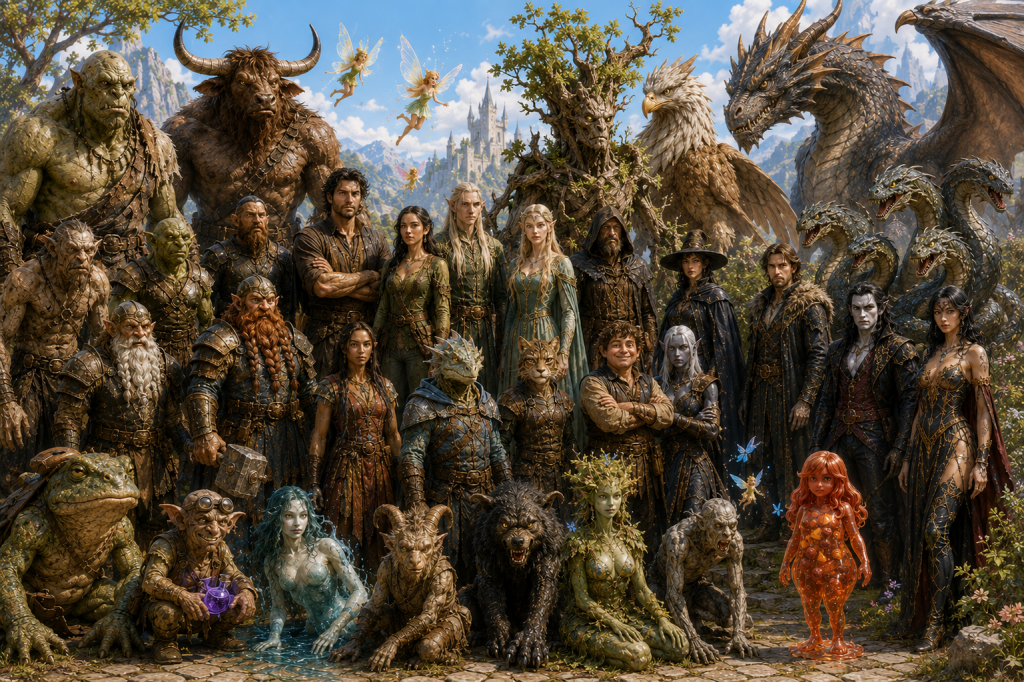
Orc

Origins (Folklore): Old songs say the gods shaped orcs from clay and set them into the furnace of war, so they would emerge as soldiers who could not be broken. Whether true or not, their endurance is legend. Appearance (Field Notes): Orcs stand taller and broader than most men, with corded muscles and skin in shades of deep green, gray, or earthen brown. Tusks jut from their lower jaws, and their eyes glint in hues of red, amber, or pale steel. Hair is coarse, often worn long in braids or shaved for battle. Strengths: Stamina unmatched, capable of marching or fighting for days. Keen vision at night and in stormlight. Generations of battle knowledge carried in their songs. Weaknesses: Tempers burn hot, often blinding them to subtlety. Distrustful of outside magic, superstitions weigh heavily. Honor binds them — but their definition of it may not match a man’s. Culture: Orcs live by clan, each sworn to a chieftain through oaths of blood. Songs of ancestry serve as their written record, while shamans call on elemental spirits, though fewer answer as magic fades. Chiefs are not always the strongest, but the one who can outthink rivals and survive the challenge. Place in the World: Feared as raiders, hired as mercenaries, yet not without honor. Some tribes seek peace, hoping to outgrow the cycle of war their ancestors could never escape.


Giant

Origins: Among the eldest of beings, some say born of elemental forces themselves — sky, storm, mountain, fire, and ice. Their lineages predate human kingdoms. Appearance: Ranging from twelve to twenty feet in height. Their appearance reflects their origin: storm giants with skin like clouded skies, fire giants with ash-dark flesh, ice giants pale as frost, hill giants earthen and broad. Strengths: Colossal strength, mastery of natural forces, and a presence that commands fear. Many wield storms, avalanches, or volcanic fire with the ease of breathing. Weaknesses: Enormous size makes stealth impossible and sustenance difficult. They are slower to move in confined spaces and vulnerable to cunning traps or magic when isolated. Culture: Organized into clans by type, each with strict hierarchies and ancient traditions of honor. Feuds between clans span centuries, and their sagas recount victories before humankind existed. Place in the World: Giants are distant rulers of wild places, rarely interfering in mortal affairs unless provoked or compelled. When they do descend from their strongholds, the balance of kingdoms shifts in their wake.

Fairy

Origins: The fae are among the oldest children of the Weave, born when the first forests drank deep of magic. They are neither mortal nor immortal in the way of gods, but exist as living echoes of enchantment woven into the natural world. Where magic pools thickest — in glades, rivers, or forgotten ruins — fae are most often found. Appearance: Small, luminous beings no taller than a man’s forearm. Their wings resemble butterflies or dragonflies, translucent and ever-moving, scattering sparks of light as they beat. Their features are delicate and near-perfect, with gemstone eyes and voices that chime like silver bells. They often glow faintly, dimming in sorrow or sharpening in delight. Abilities: Illusions of light, sound, and subtle misdirection. Can vanish from mortal sight at will, blending into tree or shadow. Natural affinity for weaving enchantments into objects or places. Gifted in riddles and bargains, able to bind mortals by the weight of their word. Weaknesses: Bound by rules of names and promises: to speak one’s true name to a fae is to surrender a piece of one’s soul. Mischief can turn to malice if disrespected. Their power is tied to the Weave — as it fades, so too do they. Some dim, weaken, or vanish entirely. Temperament: Playful and mercurial, shifting moods like the wind. They prize wit, curiosity, and courage in mortals, yet scorn arrogance, cruelty, or greed. Mischief is their nature, but rarely with the intent of destruction unless crossed. Culture: Rarely reveal themselves to mortals; most people know them only as stories. Value cleverness in word and deed. Names are sacred; titles or nicknames are safer to share. They honor bargains, though often in unexpected ways. Known to guide, trick, or test mortals — sometimes all in the same encounter. Place in the World: Guardians of old forests, streams, and crossroads where magic lingers. Symbols of wonder in stories told to children. Their sudden appearance in the mortal world signals imbalance: the fading of the Weave has unsettled them, pushing them closer to humankind. May hold fragments of knowledge Eleonore will need to understand the dying magic.

Notable Fae include Bea and Barnaby.

Halfling

Origins: Legends claim they were born from humbler stock of men, favored by the gods for their resilience and cheer. Others say they are children of the earth itself, crafted from soil and sun. Appearance: Standing between three and four feet tall, halflings are round-cheeked, light-footed folk. They favor simple clothing, often in earth tones. Their hair is thick and curly, and their bright eyes shine with curiosity. Strengths: Naturally quiet and nimble, skilled at slipping unnoticed through both town and countryside. They are hardy despite their small size, resilient against hunger and hardship. Their sense of community is unbreakable. Weaknesses: Physically weaker than men, with little taste for large-scale war. Many halflings prefer to avoid conflict entirely, which leaves them vulnerable to conquest. Culture: Rooted in hearth and harvest. Halflings live in small villages, prizing food, song, and comfort. Family bonds are everything, and disputes are solved with wit more often than steel. Wanderers among them are rare but keenly remembered when they return. Place in the World: Seen as harmless by most, halflings often thrive under the shadow of greater kingdoms, trading crops, ale, and crafted goods. Yet their underestimated nature hides sharp minds and surprising bravery when their homes are threatened.

Hydra

Origins: Said to rise from cursed rivers and swamps, born of ancient water-serpents twisted by corruption. Appearance: Gigantic reptilian beasts with multiple serpentine heads on long necks. Strengths: Regenerates heads when severed; immense strength; amphibious. Weaknesses: Fire cauterizes wounds to halt regrowth; slow and cumbersome on land. Culture: Feared in song and story as embodiments of endless struggle — slay one danger, and more arise. Place in the World: Dwell in marshes, rivers, and lakes, often destroying any settlement that strays too near.

Troll

Origins: Said to be born of stone and storm, trolls are tied to the land itself. Old tales claim their first ancestors were mountains given life, cursed to hunger forever. Appearance: Massive, ranging from eight to twelve feet tall. Skin rough as bark or rock, mottled green, gray, or brown. Limbs long and gangly yet terrifyingly strong. Their faces are brutish, with jutting brows and wide mouths filled with jagged teeth. Abilities: Enormous strength and resilience. Regenerative flesh: wounds knit quickly unless seared by fire or acid. Ability to hibernate for years, blending into stone or earth. Weaknesses: Fire and acid halt their regeneration. Slow-witted; easily tricked or distracted. Hunger drives them, and they struggle to control it. Temperament: Simple-minded but not without personality. Childlike curiosity at times, but cruel if roused or starved. Most prefer solitude, though some serve stronger masters for food or protection. Culture: Tribal, though loosely bound. Value strength above all else. Oral traditions of hunts and battles, though few trolls care for lore. Some revere the mountains or storms as gods. Place in the World: Dwell in caves, swamps, and forgotten ruins. Used as shock troops by warlords, feared by travelers. In rare moments, they show gentleness, especially to children or animals, though their hunger often overpowers mercy.

Centaur

Origins: Said to be born of ancient unions between men and spirits of the wild. Some legends claim they are the guardians left behind when gods first shaped the forests and plains. Appearance: The upper body of a human joined seamlessly with the lower body of a horse. Tall and powerful, with muscular frames, flowing manes, and often adorned with paint, feathers, or leather harnesses. Strengths: Swift as a galloping steed, with endurance unmatched on open ground. Excellent hunters and archers, their keen eyes can track prey for miles. Strong communal instincts make them formidable in coordinated battle. Weaknesses: Their size makes stealth difficult outside natural terrain. They cannot climb well, and enclosed spaces render them vulnerable. Their pride sometimes leads them to rash decisions. Culture: Tribal, living in nomadic bands across grasslands and deep forests. They revere the stars, often reading omens in constellations. Elders are respected as sages, while warriors uphold honor and defense of the herd. Place in the World: Centaurs are seen as both allies and threats. When respected, they trade and share wisdom; when insulted or encroached upon, they retaliate fiercely to defend their lands.

Treant

Origins: Born from the oldest trees when the spirit of the forest awakens within them. Some say they are planted by the gods themselves to guard the balance of nature. Appearance: Towering beings of bark, roots, and leaves. Their bodies resemble ancient oaks or pines given form, their eyes glowing like embers or sunlight through leaves. When still, they are indistinguishable from trees. Strengths: Immense size and strength, with roots that can entangle foes and limbs strong enough to crush stone. They command lesser plants, stirring vines, roots, and thorns to rise at their will. Their lifespans stretch centuries, giving them deep wisdom. Weaknesses: Fire is their bane, feared above all. They move slowly, and their enormous forms are vulnerable in open battlefields away from forests. Their patience can make them hesitant to act quickly. Culture: Treants are solitary but meet in “groves” to discuss matters of great importance. They are deeply tied to the forest’s memory and treat other species as fleeting guests. To them, time flows differently—seasons instead of days. Place in the World: Rare guardians of sacred woods. Druids and elves seek their counsel, but most men fear them as vengeful spirits of the wild. Legends say treants remember every axe stroke, and they never forgive the destruction of their kin.

Notable Treants include Rulvyn.

Witch

Origins: Not a race, but a calling. Witches are mortals who tap into the unseen currents of magic through study, instinct, or dangerous bargains. Some say the first witches learned their craft from the fae, while others whisper that demons granted them power in exchange for devotion. Appearance: Varies widely, for witches are human (or sometimes elf, halfling, etc.) by blood. Over time, however, their connection to magic marks them—unearthly eyes, hair streaked with silver, or voices that echo faintly when they chant. Strengths: Skilled in charms, curses, and elemental workings. Many are adept in potions and divination, able to glimpse possible futures. They are especially potent when weaving magic tied to the moon, stars, or seasons. Weaknesses: Power often comes at cost—fatigue, shortened life, or dependence on rare ingredients. Those who bargain with darker forces may lose their will or soul over time. Culture: Witches are scattered, rarely forming large covens except in secret. Their reputation varies: in villages, some are healers and wise women, while in noble courts they are feared as manipulators. Place in the World: Both revered and distrusted. A witch may be called to bless a harvest, but the same villagers may burn her if storms come too soon after.

Manticores

Origins: Spawn of curses or foul magic that twisted beasts and men into one. Appearance: Lion’s body, humanlike face twisted into a predator’s snarl, and a long scorpion’s tail tipped with venomous spines. Strengths: Spiked tail that launches venomous barbs; savage lion’s strength; can mimic human voices. Weaknesses: Easily enraged; pride makes them predictable; not as cunning as they seem. Culture: Lone hunters who toy with prey by speaking before striking. Place in the World: Stalk wastelands and cursed forests, regarded as omens of corruption and cruelty.

Goblin

Appearance: Shorter than men, averaging four to five feet tall, with wiry frames. Their skin tones range from gray-green to sallow yellow, often mottled, and their eyes gleam red, gold, or pale green in the dark. Their sharp features, long ears, and jagged teeth give them a sinister cast, though not all live up to the reputation. Strengths: Cunning and quick. Goblins excel at scavenging, engineering crude devices, and fighting in swarms. Their tunnels and warrens are labyrinthine, and they know how to use terrain to their advantage. Some have a knack for fire and alchemy, turning stolen scraps into dangerous weapons. Weaknesses: Individually weak in combat and prone to cowardice if outnumbered or faced with overwhelming force. They are often divided by infighting and treachery, which keeps them from uniting into anything larger than raiding parties or petty clans. Culture: Tribal, with a fondness for trickery, ambushes, and underhanded bargains. They respect cunning above brute strength, and leaders often rise through wit and treachery rather than lineage. Some tribes coexist uneasily near human or orc settlements, trading scavenged goods or hired services, but most are regarded with suspicion. Role in the World: Goblins are a constant nuisance in unsettled lands, raiding farms, caravans, and villages. Yet their ingenuity makes them unpredictable. A few individuals, cast out or unusually bold, have been known to rise above their kin, working alongside humans or others — though always with wariness on both sides.

Satyr

Origins: Children of woodland spirits and the wild gods of revelry, said to have sprung from the roots of ancient groves. Their laughter is part of the wind, their music born of the earth itself. Appearance: Humanoid above the waist with the legs of a goat, short horns curling from their brows, and shaggy hair. Their eyes gleam with mischief, and their movements are quick and fluid. Strengths: Masters of music, charm, and illusion. Their pipes and songs can stir hearts to joy, sorrow, or madness. Agile and dexterous, they slip through woods unseen and are difficult to catch. Weaknesses: Playful to a fault; their mischief sometimes crosses into folly. Easily distracted by pleasure and prone to underestimate true danger. Not built for heavy combat. Culture: Their lives revolve around revelry, song, and freedom. They travel in loose bands, bound not by hierarchy but by shared joy. They honor ancient trees and springs, leaving offerings of wine and fruit. Place in the World: Often dismissed as tricksters, but satyrs are guardians of balance in their own way, ensuring joy and wildness endure. To some they are pests, to others bringers of much-needed mirth.

Merfolk

Origins: Said to descend from sea gods or ancient water spirits. Some tales claim they were once humans who chose the ocean over the land and were remade by its depths. Appearance: From the waist up, they resemble humans of striking beauty, their features often reflecting the colors of the sea—hair like kelp, eyes like pearls or stormclouds. Below the waist, they bear powerful tails covered in shimmering scales of blue, green, or silver. Strengths: Masters of the sea, swift and tireless swimmers. They can breathe both water and air, command marine creatures, and some wield songs that calm storms or lure sailors. Their knowledge of tides and currents is unmatched. Weaknesses: Limited on land; tails hinder them outside the sea, and long absence from water weakens them. Their pride makes them disdainful of “land-walkers,” leaving them slow to trust. Culture: Merfolk live in sprawling cities of coral and stone beneath the waves. They are organized into clans led by sea-kings or queens. Their society prizes artistry, song, and warcraft alike, and they guard their treasures fiercely. Place in the World: To sailors, they are both blessing and curse—rescuers of the drowning, or doom-bringers who drag ships into the depths. Coastal folk leave offerings at shrines to earn their favor, while pirates tell of whole fleets lost to their wrath.

Dwarf

Origins: Forged from stone and fire, according to legend, by the gods of earth and craft. Others say they simply dug so deep into the mountains that the rock itself gave them life. Appearance: Short, broad, sturdy. Dwarves stand between four and five feet tall but are thick with muscle. Their hair is dense and often worn long, their beards (for men and some women) considered marks of pride. Strengths: Incredible endurance and skill in stonework and metalcraft. Dwarves are famed miners and smiths, their weapons and armor prized across the realms. They fight with axes, hammers, and shields like extensions of their own bodies. Weaknesses: Slow to trust outsiders, and their stubborn pride can cause strife even among allies. They are less suited to magic, their talents bound more to forge and earth. Culture: Clan-based, with loyalty to kin above all else. Dwarves revere ancestors and keep long records of lineage and craft. Feasts and songs honor both history and labor. Place in the World: Found mostly in mountain halls or underground strongholds, their kingdoms are bastions of stone and fire. They trade metals and goods with men and elves, but rarely share the secrets of their craft.

Chimera

Origins: Spawn of wild, uncontrolled magic that fused creatures into abominations. Appearance: A lion’s body with three heads — lion, goat, and serpent — and often draconic wings. Strengths: Multiple heads with heightened awareness; lion’s strength; serpent’s venom; goat’s brutal horns; some breathe fire. Weaknesses: Chaotic minds, sometimes turning against themselves; difficult to predict. Culture: Abhorred as violations of nature. Rarely appear except in places steeped in wild or broken magic. Place in the World: Symbols of chaos, feared as signs of natural law unraveling.

Ogre

Origins: Said to be descended from trolls and giants, though diminished in wit. Folklore claims they were cursed for gluttony, left to wander hungry for eternity. Appearance: Eight to ten feet tall, broad-shouldered and thick-skinned, with mottled gray or brown hides. Heavy brows, tusked mouths, and shaggy hair lend them a brutish, menacing look. Strengths: Immense raw strength; capable of smashing stone, uprooting trees, or wielding boulders as weapons. Incredibly resilient to pain and fatigue. Weaknesses: Dim-witted and easily tricked. They rely on brute force rather than strategy. Fearful of fire, and clumsy in enclosed spaces. Culture: Tribal and nomadic, traveling in small family groups. They measure worth by size, strength, and trophies taken. Their feasts are legendary for sheer volume, often ending in brawls. Place in the World: Feared as raiders, sometimes coerced or hired as shock troops by more cunning leaders. Ogres embody untamed wilderness and unchecked appetite.

Liche

Origins: Born of mortal ambition, liches are powerful sorcerers who bind their souls to phylacteries, sacrificing their humanity for eternal existence. Most were once great kings, archmages, or priests unwilling to face death. Appearance: Gaunt and skeletal, with skin stretched tight over bone or sloughing away entirely. Their eyes burn with cold fire, often blue, green, or violet, and their presence chills the air. They often wear the remnants of their mortal finery or robes of their order. Strengths: Immortality and mastery of dark magic. They command legions of undead and wield spells capable of withering armies. Their cunning is sharpened by centuries of accumulated knowledge. Weaknesses: Their soul is tied to a phylactery; destroy it, and the lich perishes forever. Their arrogance blinds them, and most are estranged from the living, unable to understand mortal hearts. Their bodies, though durable, are still fragile compared to their sorcery. Culture: Liches have no culture of their own, for each is an empire of one. Some rule in secret from forgotten tombs, others haunt ruined keeps, keeping only the company of the dead. Their legacy is their will, their obsession with power. Place in the World: Rare and feared above all. A lich is not merely an enemy but a calamity, for its schemes span centuries and its ambitions often threaten entire kingdoms.

Wraith

Origins: Wraiths are the restless dead, born when hatred, grief, or unfinished oaths bind a soul to the mortal plane. Some arise from battlefield slaughter, others from betrayal, their essence twisted into shadows. Appearance: Wisps of darkness shaped like their former selves, though hollow and gaunt. Their eyes glow faintly—red, white, or violet—and their forms ripple like smoke. Some carry ghostly echoes of armor or weapons. Strengths: Near incorporeal, able to pass through walls or vanish into shadow. Their touch drains warmth and life, leaving living flesh weak or frozen. They inspire terror, often breaking mortal resolve before battle even begins. Weaknesses: Bound by what created them—an oath, a grave, or a specific place. Sunlight weakens them, and holy relics or strong wards burn their essence. Without their anchor, they eventually unravel. Culture: Wraiths have no true society, though groups sometimes gather in haunted places where suffering is strongest. They speak in whispers, often repeating fragments of memory or the words of their death. Place in the World: To most, wraiths are omens of ill fate, haunting ruins, battlefields, and burial grounds. Some scholars believe that to destroy a wraith is an act of mercy, freeing the soul at last.

Stonewraith

Origins: Stonewraiths are the remnants of miners, builders, or creatures whose lives ended deep underground, their spirits fusing with the ore and rock around them. Born from greed, betrayal, or collapse, their souls never ascended but instead sank into the bedrock, animating the stone itself. Unlike common wraiths of shadow, Stonewraiths are bound to the veins of mineral and crystal they died among, becoming guardians of the deep and horrors to the living. Appearance: They resemble jagged humanoid figures half-formed from stone, ore, and crystal. Their bodies crack and shift as though barely held together, seams glowing faintly with molten light or veins of quartz. Their faces are featureless save for glowing eyes—amber, gold, or volcanic red—that burn within hollow sockets. They move with grinding, scraping sounds, sometimes phasing through walls like the stone itself is their flesh. Strengths: Can merge with and travel through stone, appearing or vanishing without warning. Absorbs the life force of creatures they touch, leaving victims partially petrified or crumbled into dust. Extremely durable; blades and arrows do little unless enchanted or tipped with special metals. Draw power from nearby crystal veins or ore, making them stronger in rich mines or caverns. Instill deep dread in mortals, a suffocating sense of being buried alive. Weaknesses: They are tethered to the stone that birthed them; remove them from the mine or shatter their anchor-crystal, and their form weakens. Loud, resonant sounds (like bell chimes or dwarven hammers ringing true) can destabilize their shape and drive them back into dormancy. Cannot withstand prolonged exposure to sunlight — it cracks their stone shells and disperses the soul within. Salt and consecrated earth form barriers they cannot easily cross. Culture: Stonewraiths have no true culture or language, but they echo fragments of those who created them. Some whisper in the voices of lost miners, others drag chains or tools of their former lives. Rarely, they form loose “colonies” in abandoned mines, drawn together around rich veins of ore like insects to a hive. In such cases, they may defend tunnels as if protecting sacred ground. Place in the World: Stonewraiths are dreaded omens of greed and loss. To dwarves, they are the cursed remains of fallen kin who linger too long underground. To miners, they are nightmares that stalk the dark when greed digs too deep. Some scholars argue they are not evil by nature, but trapped between life and death — their destruction is seen as mercy, breaking the bond between soul and stone. Tales claim they emerge when great shifts in the earth occur, heralding collapse, disaster, or the awakening of something far older below.


Elves

Origins: Children of starlight, said to have been shaped when the world was still new. They were gifted longevity by the ancient Weave of magic itself. Appearance: Tall, slender, graceful. Their skin ranges from pale as moonlight to deep as polished mahogany, and their ears taper to elegant points. Their eyes often glow faintly with color—emerald, sapphire, or amber—hinting at their magical heritage. Strengths: Ageless beauty and sharp senses. Masters of craft, song, and spell. Many elves wield elemental or nature magic with ease, and their archers are legendary. Weaknesses: Slow to change, prone to arrogance, and vulnerable to despair when their long lives stretch too far. The fading of magic in the world strikes them hardest. Culture: Elves value memory and artistry. Their cities are woven into forests, mountains, or lakes, often blending seamlessly with nature. They prefer councils to kings, and lineage is traced as much through craft as blood. Place in the World: They stand as remnants of an elder age, often admired, envied, or resented by men. Many withdraw as the world shifts toward human rule, but their knowledge still anchors much of what remains of magic.

Werewolves

Origins: Humans cursed by dark magic, savage spirits, or the bite of another werewolf. In some bloodlines, the curse is hereditary, passed from parent to child. Appearance: In human form, they often have sharp features, wild hair, or a predatory air. When transformed, they become massive wolf-beasts, blending man and predator with fangs, claws, and glowing eyes. Strengths: Extraordinary physical power, keen senses of smell and hearing, unmatched stamina, and regeneration from nearly any wound. In their wolf-form, they are apex hunters. Weaknesses: Silver burns and pierces them as no other weapon can. Their transformations, tied to the moon, often leave them without control, and in that state they may kill friend as easily as foe. Culture: Many live in packs, ruled by an alpha. Some accept their dual nature and seek balance, while others reject society entirely, becoming outcasts feared by all. A few have found ways to master their transformations, but they are rare. Place in the World: Their howls haunt deep forests and mountains. Farmers and villagers fear them, but some remote clans revere werewolves as chosen guardians of the wild.

Vampires

Origins: Once mortal men and women who succumbed to a dark curse, a blood pact, or an ancient corruption. Their condition spreads through the bite or blood of another vampire, though the first of their kind are whispered to have been created by gods of shadow. Appearance: Pale, ageless, often unnervingly beautiful or charismatic, with eyes that glow faintly in darkness. They hide elongated fangs until hunger or combat forces them into view. Some grow more corpse-like with age, their beauty rotting away to reveal the monster beneath. Strengths: Immortality, supernatural speed and strength, heightened senses, and hypnotic charm. Many wield shadow magic or shapeshifting abilities, such as becoming bats, wolves, or mist. Weaknesses: Sunlight burns them to ash, holy relics repel them, and they cannot cross running water without aid. Hunger gnaws constantly; the longer they go without blood, the more feral they become. Culture: Vampires form secret courts, ruling their kind from shadowed castles or underground crypts. They are steeped in politics, bound by strict hierarchies, with “elders” holding dominion over younger spawn. Betrayal and blood-feuds are common. Place in the World: They rule hidden empires within empires, whispering in the ears of nobles or haunting remote ruins. To common folk, they are bedtime terrors — to kings, they may be unseen allies or unseen enemies.

Cyclops

Origins: Ancient myths claim they were born of the earth itself, children of mountains and storms, gifted with one eye to focus all their strength into craft and vision. Appearance: Tall as ogres but leaner, with a single central eye glowing faintly in dim light. Skin shades of stone-gray, bronze, or weathered earth. They often wear rough-forged armor and wield massive tools. Strengths: Their great eye grants far sight, night vision, and sometimes the ability to see magic. Cyclopes are unmatched smiths, crafting blades and tools of extraordinary durability. Weaknesses: Poor depth perception makes precise combat difficult. Their single eye is their greatest vulnerability. Many live in isolation, lacking coordination in groups. Culture: Reclusive, dwelling in caves or coastal cliffs. They tend herds, carve stone, or forge in solitude. Their songs are rare but powerful, echoing like thunder. Place in the World: Rare and often feared, though their weapons are prized by kings and warlords. A Cyclops ally is a boon; a Cyclops enemy is a calamity.

Harpies

Origins: Said to be born of curses laid upon mortals who defied the gods, harpies carry fragments of divine wrath in their blood. Others whisper they are the children of wind spirits and witches. Appearance: Twisted blends of woman and bird. Their upper bodies resemble gaunt, sharp-featured women with wild hair, while their arms end in powerful wings. Their lower halves are taloned and clawed like great raptors. Their eyes gleam gold or black, unblinking and predatory. Strengths: Masters of the skies, able to dive and strike with terrifying speed. Their voices can shriek loud enough to deafen or disorient foes. Some harpies possess a haunting song that lures travelers to their doom. Weaknesses: Fragile bones compared to other monsters; their bodies cannot withstand heavy blows. Hunger often drives them to recklessness, and they are easily baited with food or shiny objects. Culture: Harpies gather in flocks, nesting on cliffs or ruined towers. They squabble endlessly but unite to protect their nests. They value trophies—bones, jewels, and weapons of those they’ve slain. Place in the World: Viewed as omens of misfortune. Farmers fear them for stealing livestock, sailors dread them for circling ships, and nobles curse them for desecrating graves. Yet some scholars believe harpies were once guardians twisted by divine punishment.

Naga

Origins: Said to descend from ancient serpents blessed—or cursed—by the gods. Some myths claim they were once humans who sought eternal power and were transformed. Appearance: Serpentine from the waist down, with long coils in place of legs. From the waist up they resemble humans, often beautiful and unnerving, their eyes slitted like a snake’s. Scales gleam in shades of emerald, bronze, or obsidian. Strengths: Agile and powerful in water or jungle terrain. Their venom can paralyze or kill, and some naga wield potent magic tied to storms and rivers. Their hypnotic gaze can bend weaker wills. Weaknesses: Cold slows their movements, and their serpentine bodies make them vulnerable in open, dry environments. Pride often blinds them to subtle threats. Culture: Divided between noble naga, who rule hidden temples or sunken cities, and feral naga, who raid and enslave. They view themselves as inheritors of the world’s oldest wisdom. Among their kind, bloodline and magical power dictate status. Place in the World: Naga are feared rulers of deep rivers and jungles. Human tribes sometimes worship them as gods, offering tribute in exchange for protection—or to stave off their wrath.

Demon

Origins: Born from the rift between worlds, demons are fragments of chaos given form. Some believe they are corrupted spirits that fell from the heavens, while others claim they are the nightmares of mortals made flesh. Appearance: Varied and monstrous—horns, fangs, claws, wings, scales. No two demons are the same, though all carry an aura of dread. Some disguise themselves in pleasing forms to tempt mortals. Strengths: Immense physical strength and resistance to most mortal weapons. Many wield fire or shadow magic, and their words are weapons—able to twist mortal hearts with bargains and lies. Weaknesses: Bound by contracts and names. To know a demon’s true name is to hold power over it. Strong wards, holy relics, and light magic can drive them back. Culture: Hierarchical, but only by force. The strongest demons dominate, the weaker ones scheme or flee. Their “society” is more endless conflict than order, though some lords rule small infernal courts. Place in the World: Rare and feared. They lurk at the edges of reality, summoned by reckless mortals or slipping through weak points in the world’s fabric. Their presence is often a herald of ruin.

Dragons

Origins: Born at the dawn of creation, said to be the children of the world’s first fire and storm. Each dragon embodies an aspect of nature—fire, ice, storm, shadow, or light. Appearance: Vast, scaled, and awe-inspiring. Their wings blot the sky, their scales shimmer like jewels or coal, and their eyes burn with ancient intelligence. Strengths: Immense strength, near-impervious hide, and mastery of elemental breath. Many dragons wield sorcery equal to a dozen mages, their long lives granting wisdom and cunning. Weaknesses: Their pride often leads to downfall. They are bound by their own greed or obsessions, whether hoarding gold, knowledge, or worship. Powerful ballistae, enchanted weapons, or combined armies have slain them before, but never easily. Culture: Dragons live mostly solitary, though some form loose broods or dynasties. Each sees itself as a sovereign ruler, and rivalries between dragons can scar entire regions. Place in the World: Rare but feared across all kingdoms. A dragon may sleep for centuries, its dreams shaping the land around it, then rise to demand tribute or unleash devastation. Their existence is legend, yet their shadows linger long.

Notable Dragons are Lysera and her brood.

Siren

Origins: Said to have been born from the sorrow of sea-goddesses who wept for drowned sailors. Their songs carry the echoes of those divine laments, woven with enchantment strong enough to bend mortal will. Some tales say they are kin to merfolk, others that they were cursed nymphs cast into the sea. Appearance: Sirens take two forms. In the water, they are sleek and otherworldly, with long flowing hair, pale or shimmering skin, and eyes that gleam like the depths. Their lower bodies may resemble fish, eels, or smooth scaled limbs depending on lineage. On land, they can appear fully human—often strikingly beautiful, though their voices always betray them. Strengths: Their song. It can entrance, confuse, or lure sailors to their doom. They are strong swimmers, swift in the sea, and some can command minor water magic (currents, mists, or tides). Weaknesses: Bound to the sea. Away from water too long, their strength withers. Their magic falters if their song is interrupted, and some are vulnerable to charms, wards, or even simple deafness in their prey. Culture: Sirens live in small covens along rocky shores or hidden islands, rarely gathering in great numbers. They are fiercely protective of their waters but do not always kill those they ensnare; some keep “guests” for companionship or trade. Their society values song, secrecy, and survival. Place in the World: To sailors, sirens are omens—sometimes blessings, often doom. Harbors whisper of them, merchants plot routes to avoid their haunts, and bards weave them into every tale of the sea. While feared, they are also desired, for some rulers have tried to capture sirens to harness their magic, usually to their ruin.

Griffins

Origins: Said to have been born from the first bond between earth and sky, griffins are ancient guardians tied to mountains and high places. Appearance: Lion’s body with eagle’s head, wings, and talons. Gold, bronze, or tawny feathers; sharp, luminous eyes. Strengths: Deadly hunters combining flight and predatory strength; unmatched eyesight; fiercely loyal if tamed. Weaknesses: Territorial, quick to anger, and slow to forgive betrayal. Culture: Symbols of kingship and divine guardianship. Some courts breed them, though true bonding requires respect. Place in the World: Wild griffins guard mountain passes, sacred groves, or ancient ruins. Tamed griffins serve as elite mounts or guardians for royalty. Notable Grffins include Hyacinth and Calivar.

Basilisk

Origins: Legends claim they hatch from a cursed egg laid by a rooster and warmed by a serpent, though others say they are the spawn of dark magic. Appearance: Serpentine or lizardlike, covered in shimmering green or black scales. Eyes glow with baleful fire. Strengths: A gaze that petrifies or kills; venom strong enough to melt flesh; thick hide. Weaknesses: Mirrors or polished metal can turn its gaze back upon itself; susceptible to certain charms and rare herbs. Culture: Feared and shunned; their blood and scales are prized in alchemy, though few dare hunt them. Place in the World: Lurking in caves, ruins, or cursed lands, basilisks are solitary terrors, their presence marking places of corruption.

Minotaur

Origins: Said to be cursed descendants of men who offended the gods, bound forever in beastly form. Others claim they were bred in ancient days as guardians of labyrinths. Appearance: Towering humanoids with the head of a bull, broad horns, and muscled bodies covered in coarse hair. Their eyes gleam red or brown, bestial and fierce. Strengths: Great physical strength, endurance, and ferocity in battle. They wield heavy axes or clubs with devastating force. Weaknesses: Quick tempers and limited patience. They are easily provoked, and once enraged, slow to calm. Clever foes can outwit them in confined spaces. Culture: Minotaurs form clans in rugged highlands or deep labyrinths, their loyalty fierce within their tribe. They honor strength, courage, and cunning in equal measure. Place in the World: Known as mercenaries or guardians of sacred sites. Travelers whisper of hearing heavy hooves in the dark before a charge comes.

Shadows

Origins: The remnants of souls devoured by dark magic. All that remains of them is hunger and spite, shaped into half-life. Appearance: Shapeless forms of black smoke with glowing eyes, their edges shifting like mist. They move silently, only whispering when near prey. Strengths: Intangible, they can pass through walls and sap warmth, strength, and even life itself with a touch. They instill despair and fear in their victims. Weaknesses: They are fragile in strong light, fire, or holy magic. They cannot survive in daylight. Culture: Shadows are without thought or language, but when many gather they can form strange patterns, like flocks of birds, suggesting some remnant of instinct. Place in the World: Found in ruined cities, cursed caverns, or battlefields where countless lives were lost. Superstitious folk believe every shadow cast at night might hide one of them.

Elementals

Origins: Born of raw creation, elementals are living embodiments of fire, water, air, or earth. Some are called forth by mages; others awaken naturally in places where the elements surge strongest. Appearance: Their forms reflect their element — flames given shape, bodies of stone, whirlwinds carrying faces within, or figures of liquid water. They can be human-like or monstrous, depending on the will shaping them. Strengths: Elementals are nearly indestructible within their element, able to reform after being scattered. They wield raw elemental power: fire burns endlessly, stone crushes, wind slices, and water drowns. Weaknesses: They are tied to balance. If their element is disrupted — fire drowned, earth shattered, water evaporated, or air stilled — their strength wanes. Binding magic can control or banish them. Culture: Elementals have no true society but exist in harmony or rivalry with each other. Some whisper that they are fragments of the world’s soul, guardians of its primal essence. Place in the World: Found in volcanoes, rivers, deserts, storms, and mountains. Often summoned by wizards for war or protection, though binding them is dangerous. — Dryads Origins: Spirits bound to ancient trees, born when the first forests awoke. Their lives are tied to their tree’s health; when it thrives, they flourish, and when it dies, so do they. Appearance: Beautiful women with bark-like skin, green hair like leaves, and eyes glowing like sap. They can shift between near-human forms and fully wooden, plantlike shapes. Strengths: They can command plants, coaxing roots and vines to grow, blossom, or entangle. They are nearly immortal so long as their tree lives. Their beauty and song can enchant mortals. Weaknesses: Bound to their trees, they cannot stray far without weakening. Fire and axes are their bane. Culture: Dryads live in secluded groves, rarely leaving their trees. They form close-knit sisterhoods within great forests and may ally with elves or druids. Place in the World: Guardians of the oldest woods, revered by some as goddesses, feared by loggers who whisper of being lured into forests never to return. — Sylphs Origins: Born from the breath of storms and the high mountain winds. Ancient lore says they are children of the sky gods, carrying whispers of prophecy. Appearance: Ethereal and slender, their bodies woven from mist and cloud. Their wings shimmer like dragonfly glass, nearly transparent. Strengths: Masters of wind and weather. They can ride storms, become invisible in mist, and carry whispers across leagues. Their voices soothe or terrify as they will. Weaknesses: Fragile, fading when trapped or bound. Strong wards or grounding spells can tether them to earth, which they loathe. Culture: Sylphs are wanderers, often solitary. They are curious about mortals but avoid long bonds, as fleeting as the breezes they embody. Some serve great sky spirits or storm gods. Place in the World: Seen at dawn over mountain peaks, in whirlwinds on plains, or in the sudden hush before a storm. Farmers may leave offerings of grain to keep them from stirring tempests. — Nymphs Origins: Born of natural beauty and wild places — springs, rivers, meadows, or groves. They embody the life-force of those places. Appearance: Exquisite maidens, more beautiful than mortals, their features reflecting the place they guard: water-nymphs with flowing hair like streams, meadow-nymphs with floral crowns, and so on. Strengths: They inspire awe and love, their beauty able to enchant mortals and even gods. They can heal wounds, bless crops, or curse despoilers of their domains. Weaknesses: Bound to the land or water they spring from. If their place is polluted, burned, or destroyed, they fade or go mad. Culture: Nymphs form loose sisterhoods in wild lands, singing songs of beauty and sorrow. They are free-spirited, often fickle, and dangerous if spurned. Place in the World: Known in legends of shepherds, hunters, and travelers. Mortals tell of vanishing into their groves, never to return, whether to bliss or doom. — Salamanders Origins: Fire-spirits said to be born of the world’s first flames. Some say they crawled out of the sun itself; others, that they dwell in the heart of every forge. Appearance: Small, lizardlike creatures with glowing ember-eyes, their scales flickering with fire. Greater salamanders can grow to man-sized, wreathed in flame. Strengths: Masters of fire, they cannot be burned and can ignite anything they touch. Their bodies heal as long as flame surrounds them. Weaknesses: Water weakens or kills them, and cold dampens their fire. Without flame to sustain them, they wither. Culture: They have no true society, but legends say they gather in volcanic caverns where rivers of magma serve as their feasting halls. Blacksmiths sometimes whisper prayers to them. Place in the World: Found in volcanoes, deserts, and forges. Rarely seen, but signs of them are felt in sudden sparks, unexplained blazes, or the warmth of an otherwise dead hearth.

Ghouls

Origins: Humans twisted into monsters by consuming human flesh, or cursed grave-robbers punished for their desecration. Their curse spreads as they feed, infecting others with their hunger. Appearance: Emaciated, gray-skinned, with elongated limbs, claws, and jagged teeth. Their eyes glow faintly yellow or red in darkness. Strengths: Swift, agile, and unnaturally strong for their size. Their claws can rend armor, and their bites spread the curse. Weaknesses: Mindless hunger makes them reckless, and they are weakened by sunlight. Fire can drive them off. Culture: They have no true society, but they sometimes gather in packs that act like twisted families, led by the strongest. Place in the World: Graveyards, mass graves, and battlefields. Some kings bury their dead under heavy stone not to honor them, but to keep ghouls from rising.

Wyvern

Origins: Believed to be a lesser branch of dragonkind, diminished as magic waned through the ages. Appearance: Two-legged, winged reptiles with barbed tails dripping venom. Smaller and leaner than dragons. Strengths: Flight, venomous stinger, sharp talons and jaws. Weaknesses: Driven by instinct rather than cunning; easily baited or distracted. Culture: Considered beasts rather than thinking creatures. Some warlords use them as war-mounts, though they resist training. Place in the World: Haunt high crags and desolate plains, descending to raid livestock and villages.

Banshee

Origins Banshees are thought to be the restless spirits of women who suffered tragic or violent deaths. Some lore claims they were once seers, priestesses, or women tied strongly to magic whose voices carried power in life — and who now carry sorrow and warning into death. Appearance Banshees are most often described as pale, ghostlike women with flowing hair and ragged gowns that ripple as though underwater. Their eyes glow faintly, silver or green, streaming endless tears. In some tales they appear young and beautiful, in others as haggard crones — their form shifting with the fear of the onlooker. Strengths Their wail can chill the heart, stunning or even killing mortals who hear it too closely. They can pass through walls, drift on the wind, and appear where death is soon to follow. Often unseen unless they choose to be, their presence is more felt than witnessed. Weaknesses They cannot directly harm with touch — their strength lies in terror and prophecy. Iron and silver are said to weaken their presence, dispersing their form. Sacred ground and wards of pure light can drive them away. Culture Banshees have no true society; they are solitary, bound to the bloodlines or lands they haunt. They do not kill for sport but serve as omens, heralding death with their cries. Families once believed that to hear a banshee meant a loved one would soon pass. Place in the World Feared yet respected, banshees linger on the edges of villages, in ruined keeps, or by lonely roads where death has walked before. Some scholars believe their existence is tied to the fading weave of magic itself — that their cries grow sharper as the world itself wanes. Encounters with them are rare, but no one forgets the sound once it has been heard.

Wight

Origins: Once mortal kings, warriors, or mages, cursed by dark sorcery to linger beyond death. Their souls are chained to their corpses, twisted by hatred or a will to guard their tombs. Appearance: Tall and gaunt, with withered flesh stretched over bones. Their eyes glow cold blue or green, and they wear tattered armor or rotted finery from their mortal lives. Strengths: Stronger than common undead, with intelligence intact. They drain life with their touch and command lesser undead such as skeletons or zombies. Weaknesses: Fire and sunlight burn them; their bond to their burial site or relic makes them vulnerable if destroyed. Culture: Wights rarely gather. Each is bound to the ruins, crypts, or treasures it once ruled in life. They remember fragments of who they were, often driving them to jealousy or rage. Place in the World: Barrows, cursed tombs, and ruined fortresses. Brave adventurers may disturb them when seeking treasure, but often regret the attempt.

Jelly Cryptid
As this is a creature I designed personally for my book, I am going to wait to put this up as to avoid spoilers.